
Just a Baby: Become a parent
Just a Baby Inc.Parenting
3.4648.00 Reviews
- Version
- 25.4.0
- Installs
- 100.00K
- Age Rating
- Mature 17+
Screenshots
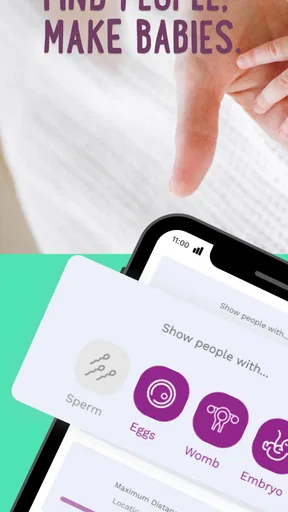
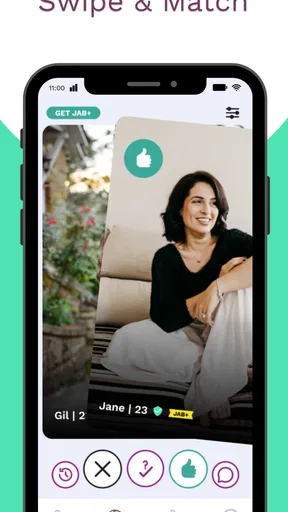

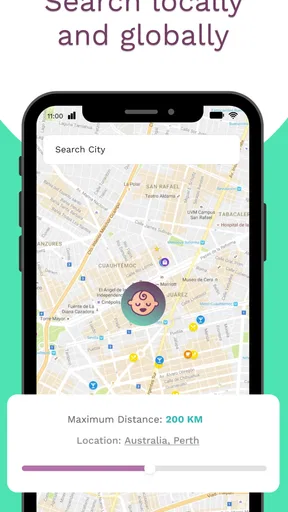


Our Review of Just a Baby: Become a parent
 Analysis by Appyee
Starting a family through donation, co-parenting, or surrogacy involves decisions that are far more personal than choosing an ordinary social app. Just a Baby is designed for people exploring those paths, bringing potential egg and sperm donors, co-parents, and surrogates into one place. I approached it less like a casual matching service and more like an initial discovery tool: useful for opening conversations, but not something I would treat as a replacement for medical, legal, or professional support.
The app comes from Just a Baby Inc. and sits in the parenting category, although its audience is clearly adults making sensitive reproductive plans. It is free to install, with optional purchases ranging from $1.99 to $109.99 per item. Its mature 17+ age rating makes sense because the discussions can involve fertility, pregnancy, sexual health, family structure, and emotionally serious commitments.
How I Would Decide Whether This App Fits
Before I decide whether to keep Just a Baby in my routine, I would first ask what progress should look like for me: finding a conversation worth pursuing, clarifying which family-building route feels right, or simply learning what questions I need to answer. That personal benchmark helps separate useful exploration from endless browsing, and it makes the next section’s focus on lasting value more practical.
Start with your route to parenthood
The first question is not whether the interface feels convenient. It is whether you already know what kind of connection you need. Someone looking for a sperm donor has a different screening process from someone searching for a co-parent, while a potential surrogate needs an even more careful approach involving health, legal arrangements, and support networks.
That distinction matters because a broad community can be helpful at the beginning, but it can also make the experience feel unfocused. I found the app most useful when I entered with a clear purpose and a short list of non-negotiables. Without that preparation, browsing profiles or starting conversations can become emotionally tiring rather than productive.
I would write down practical questions before using it: Do I want an anonymous arrangement or an ongoing relationship? Am I open to international conversations? What involvement would I expect from a donor or co-parent? Which topics must be discussed before exchanging personal contact details? Having these answers ready makes the app work more like a structured first step instead of an endless stream of possibilities.
Understand what the app can and cannot do
Just a Baby helps people find and contact others with related intentions. That is its central value. It does not turn a stranger into a vetted medical professional, legal advisor, or guaranteed match. I would use it to identify possibilities and learn whether communication feels respectful, not to make a final decision about parentage based on a profile alone.
This is especially important for international connections. A conversation that appears promising may involve different rules around donor conception, parental rights, surrogacy, identity disclosure, travel, or medical records. The app can widen the search, but the wider the search becomes, the more responsibility falls on the people involved to verify everything independently.
My practical rule is simple: use the app to begin due diligence, never to skip it. Before making commitments, I would consult the appropriate clinic, lawyer, counselor, or fertility specialist for the arrangement being considered.
Prepare for a mature, personal environment
The 17+ rating is not a minor detail here. This is not a general parenting feed filled with nursery ideas or school advice. Conversations can quickly become intimate, and users may disclose health information, relationship history, family expectations, or financial concerns. I would only use it if I felt comfortable setting firm boundaries around what I share.
A sensible first exchange should stay relatively general. I would discuss intentions, location, desired level of involvement, and basic expectations before sharing identifying documents, medical records, home details, or financial information. Moving slowly is not being difficult; it is a practical way to see whether the other person respects boundaries.
Where Just a Baby is strongest
The biggest advantage is concentration. Instead of searching through a general social network and hoping to find people who understand donor conception or co-parenting, I can enter an environment built around those subjects. That focus saves time and makes it easier to explain why I am there.
It is also more flexible than a narrowly defined fertility service. The app brings together several types of connections, so it can suit people who are still comparing routes to parenthood. Someone who begins by considering donation may later realize that co-parenting is a better fit, or someone seeking a co-parent may want to understand other possibilities first.
That breadth is valuable for people whose circumstances do not fit a traditional family-building path. It can also help users who feel isolated locally. A person in an area with few relevant support groups may find it easier to start a conversation with someone farther away than to wait for a local introduction.
A useful first-contact workflow
I would recommend treating each promising connection as a small, staged process rather than jumping directly into an intense conversation. First, read the profile for consistency and clarity. Next, ask the same core questions you would ask anyone else in that role. Then move to a voice or video conversation only after the written exchange feels respectful and coherent.
One non-obvious benefit of this approach is that it reveals how someone handles disagreement. A person may sound ideal while discussing broad hopes, but the important information often appears when you ask about contact after birth, medical screening, expenses, or the child’s relationship with each adult. I would pay more attention to the response style than to a polished profile.
Keeping a private comparison note can also help. Record what each person has said about location, expectations, availability, and involvement. This is not about reducing people to a checklist; it prevents important details from becoming blurred when several conversations happen at once.
What the free entry point means in practice
Because the app is free, it is relatively easy to explore before deciding whether it belongs in your family-building process. That lowers the barrier for people who are curious but not ready to pay for a specialized service immediately. The trade-off is that optional purchases exist, with individual items priced from $1.99 to $109.99.
I would not spend money simply because a conversation feels exciting. First, I would learn what the paid item changes in my own use of the app and whether it solves a real limitation. A purchase should improve a defined workflow, not create pressure to move faster with a stranger.
This is one reason I would set a budget before exploring any paid options. Reproductive decisions already involve costs outside the app, so it is easy to lose perspective when a small purchase appears to promise better visibility or access. The free starting point is enough to judge whether the community and approach suit you.
Where a different category may be better
Just a Baby is not automatically the best choice for every stage. If I wanted clinical guidance, I would choose a fertility clinic or a qualified medical service rather than a social matching app. A clinic is better suited to health screening, treatment planning, and professional oversight.
If my main need were legal structure, I would speak with a lawyer experienced in assisted reproduction and parentage. An app can help me meet someone, but it cannot replace a carefully drafted agreement or jurisdiction-specific advice. This is particularly important when donors, surrogates, or co-parents live in different regions.
For emotional preparation, a counselor or support group may be more useful than a matching environment. Someone who is grieving infertility, managing relationship tension, or unsure about becoming a parent may need a confidential space focused on feelings rather than introductions.
General social networks can sometimes offer broader communities, but they lack the same obvious focus. I would prefer this app for finding people who openly share a family-building goal, while I would prefer a general network for long-term community support after the initial connection is established.
Who should use it and who should pause
I think it is a reasonable starting point for adults who have researched their options, understand that conversations may be sensitive, and want to meet people beyond their immediate circle. It may be particularly useful for someone exploring non-traditional routes to parenthood or trying to understand which arrangement fits their life.
I would advise pausing if you are hoping for an instant, guaranteed match. The app cannot remove the uncertainty from a process that depends on trust, compatibility, health information, legal planning, and long-term cooperation. It is also not a good fit if you are uncomfortable rejecting people, asking direct questions, or protecting your privacy.
I would be cautious about using it during a period of intense pressure. If a deadline, financial crisis, or family conflict is pushing you toward a rushed agreement, the right next step is support from a qualified professional, not faster browsing.
A realistic everyday scenario
Imagine I work full time, live far from a major fertility center, and have decided that co-parenting might be more suitable than pursuing parenthood alone. I could use the app in short sessions after work, review a few relevant profiles, and start one or two conversations without immediately rearranging my life.
After an initial exchange, I would ask about location, parenting schedules, decision-making, financial expectations, and the kind of relationship each person imagines. If the answers were compatible, I would arrange a video call and then take the discussion to a professional setting before making promises. If someone avoided practical questions or pushed for private information, I would end the conversation.
In that scenario, the app’s value is not that it completes the journey. It helps me discover whether there are people whose starting assumptions resemble mine. That can be meaningful, especially when local options are limited, but the responsible work begins after the first promising introduction.
The switching cost: what happens if you move elsewhere
Trying another option is not especially difficult at the exploration stage, but switching becomes more complicated once conversations gain emotional momentum. If I move from this app to a clinic, legal service, or private arrangement, I may need to repeat my story, clarify expectations again, and rebuild trust in a different setting.
That repetition is not necessarily wasted. It can expose contradictions and encourage better documentation. I would keep my own notes rather than relying on chat history, especially when several important topics are discussed over time. I would also avoid assuming that a positive connection inside the app will remain suitable after professional screening.
The larger switching cost is emotional. A conversation may feel promising because the other person understands the same dream, even when practical compatibility is weak. I would judge the connection by consistency over time, willingness to discuss difficult subjects, and respect for boundaries—not by how quickly it becomes personal.
Version, reach, and day-to-day expectations
The current version is 25.4.0, and the app supports devices running Android 7.0 or later. Its reach is substantial enough to make the global angle meaningful, with over 100,000 installs. That does not guarantee a suitable person in my area, but it gives the service a broader starting pool than a small local noticeboard.
The average rating is 3.4 from around 2,900 ratings, alongside roughly 648 written reviews. I read that as a reason to keep expectations measured. The app clearly works well enough for many people to try, but the rating does not suggest a universally smooth experience. In a service this personal, some dissatisfaction may come from the difficulty of the subject itself, yet usability and match quality still deserve scrutiny.
I would install it only after checking that my device meets the operating requirement and would keep the app updated. More importantly, I would decide in advance how much time I am willing to spend on conversations. Without a limit, a broad global community can become distracting and emotionally consuming.
Privacy and safety habits I would follow
I would use a separate email address and avoid placing unnecessary identifying details in a public profile. I would not share copies of identity documents, medical records, banking information, or home addresses during early conversations. Any request for money, urgent travel, or secrecy would be a serious warning sign.
I would also verify a person through more than one kind of interaction. Written messages can be selective; a live conversation may reveal whether the person is consistent and comfortable answering ordinary questions. For a serious arrangement, independent professional checks matter far more than a friendly profile.
Meeting in person, if appropriate, should happen in a public place and with someone I trust aware of the plan. I would never let the app’s family-focused purpose create a false sense of safety. Shared intentions are not the same as shared character.
My recommendation after weighing the alternatives
I see Just a Baby as a useful discovery layer rather than a complete parenting solution. It wins when I need a focused place to meet potential donors, co-parents, or surrogates and I am prepared to do the difficult verification work afterward. Its free entry point makes it practical to test, while the global reach may help people who have few relevant contacts nearby.
I would choose a clinic when medical oversight is the priority, a lawyer when parentage and agreements are the priority, and counseling when emotional readiness is the priority. Those options are not competitors in every situation; they often need to work alongside an app like this.
My clear advice is to use it slowly, selectively, and with professional guidance before any commitment. It is worth trying if you want to broaden your search and understand possible connections, but I would skip it if you expect guarantees, instant certainty, or a substitute for screening. Used with realistic expectations, it can open a door. It should never be mistaken for the whole path to becoming a parent.
Verdict
Strengths of Just a Baby: Become a parent
- Simple, friendly interface suitable for first-time users.
- Helpful preparation tools for tracking pregnancy and baby-related tasks.
- Supports shared planning between partners or family members.
- Useful reminders can help organize appointments and daily responsibilities.
- Accessible design makes essential information easy to find.
Limitations of Just a Baby: Become a parent
- Some features may require an account or personal information.
- Content may feel basic for users seeking detailed medical guidance.
- Limited customization could reduce flexibility for individual family needs.
- Notifications may become repetitive if too many reminders are enabled.
- The app should not replace advice from qualified healthcare professionals.
Similar Picks in This Category
View All
Family Space
Motorola Mobility LLC.3.9

شرطة الأطفال - مكالمة وهمية
Oub Apps4.1

Findmykids: Parental Control
LETEM LTD4.6

Pregnancy + | Tracker App
Philips Electronics UK Limited4.8

Policía de niños - para padres
Kids police4.7

Pregnancy App
Amila4.9
Frequently Asked Questions
What is Just a Baby: Become a parent?
Just a Baby: Become a parent is an app designed to help people explore parenthood and connect with others who may share similar family-building goals. Depending on your situation, it may be useful for intended parents, donors, or people considering different paths to having a child. The app focuses on profiles, communication, and discovering potential matches, so users should approach every interaction carefully and respectfully.
Is Just a Baby: Become a parent safe to use?
The app may include account controls, profile settings, reporting tools, and communication features intended to make interactions more manageable, but no social or matching platform can guarantee complete safety. Avoid sharing sensitive personal information too quickly, verify the identity of anyone you contact, and use the in-app reporting options when something feels suspicious. Never send money or agree to medical or legal arrangements without professional advice.
Is Just a Baby: Become a parent free to download and use?
Just a Baby: Become a parent may be available to download at no initial cost, although certain functions can depend on the current app version, region, or optional paid features. Before registering, check the store listing for subscription details, in-app purchases, and renewal terms. Users should also review the privacy policy and cancellation instructions, particularly if they decide to upgrade their account.
Can I use the app to arrange a donor or co-parenting agreement?
The app can help users discover and communicate with people interested in family-building possibilities, but it should not replace professional medical, legal, or psychological guidance. Donor arrangements, co-parenting plans, and surrogacy-related decisions can involve complex laws and health considerations that vary by country or state. Before making commitments, consult qualified professionals and document all agreements through appropriate legal channels.
What should I know before contacting someone on the app?
Before starting a conversation, take time to read the person’s profile and clarify whether your expectations, location, timeline, and approach to parenthood are compatible. Keep early communication inside the app, ask respectful questions, and be cautious of pressure, inconsistent stories, or requests for money. If you decide to meet, choose a public place, tell someone you trust, and maintain control over your personal boundaries.
